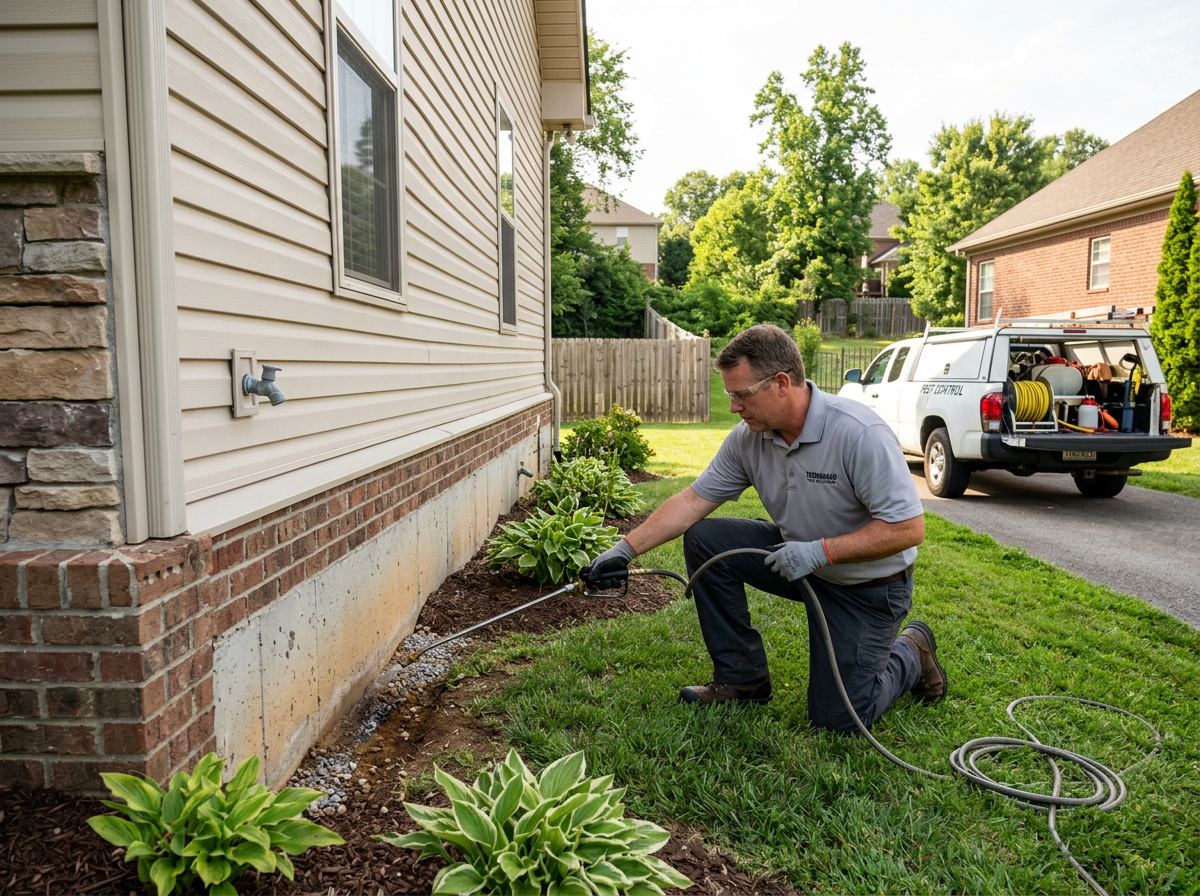
Maryville homes built between the 1960s and 1990s often sit on vented crawl spaces over red clay, where warm humid summers create ideal conditions for termite activity from March through May. Prevention starts with identifying wood-to-soil contact at sill plates and floor joists, then addressing moisture that draws foraging workers toward the foundation. Liquid termiticide applied through trenching and rodding creates a treated zone around piers and perimeter walls before swarmers appear.
Homeowners in Alcoa, Eagleton Village, and Wildwood frequently overlook gutters that overflow onto mulch beds or firewood stacked against the house, both of which keep soil moist near the structure. Installing vapor barriers on the crawl space floor and keeping at least six inches of clearance between soil and framing reduces the humidity that supports colony expansion. Regular bait station monitoring tracks activity without disturbing established barriers around slab porches and entryways.
Pre-construction soil treatment on new builds in Blount County prevents future issues by treating the entire building footprint before concrete is poured. For existing properties near Greenbelt Park or the Blount County Courthouse area, seasonal checks focus on discarded wings near windows and mud tubes on foundation walls. These steps together limit the need for more invasive drilling later while fitting the four-season climate of warm summers and cool winters.
Technician insight
In Maryville the thing that catches most people out with Termite Prevention is the red clay holding moisture right up against 1970s pier foundations on vented crawl spaces. Homeowners often fix the visible swarmers but leave the gutters dumping onto mulch beds, so the soil stays damp and termites keep finding the same entry points year after year.
Crawl Space Moisture Leading to Early Activity
A split-level in Eagleton Village showed discarded wings near a bedroom window each spring. Inspection found active mud tubes on two piers and elevated moisture from overflowing gutters. Trenching and rodding were completed along the affected side, vapor barrier sections were added, and bait stations were placed. Follow-up checks through the summer confirmed no further tubes or swarmers.
Termite Prevention Services We Offer
✓Perimeter Soil Treatment
Creates a continuous treated zone around the foundation of brick ranches using trenching and rodding to block termite entry from surrounding red clay soil.
✓Crawl Space Vapor Barrier Installation
Lays heavy-duty barriers over the dirt floor in vented crawl spaces to lower humidity that otherwise draws Eastern subterranean termites toward sill plates and joists.
✓Bait Station Monitoring Program
Places and checks stations around the exterior perimeter so activity is detected early in neighborhoods like Eagleton Village before colonies reach the home.
✓Wood-to-Soil Contact Correction
Identifies and separates framing lumber from direct soil contact at piers and foundation walls common in 1960s-1990s split-levels across Maryville.
✓Pre-Construction Soil Treatment
Treats the building footprint on new construction sites in Blount County before the slab or foundation is poured to establish long-term protection.
How it works
- 1
Initial Site Walk
Inspect crawl space, foundation walls, and exterior grade for mud tubes, wood contact, and moisture sources around the Maryville property.
- 2
Moisture Assessment
Use a meter to check humidity levels in the crawl space and note drainage issues from gutters or mulch near the structure.
- 3
Treatment Application
Apply liquid termiticide via trenching and rodding along the perimeter and drill slab areas where needed to establish the treated zone.
- 4
Ongoing Monitoring
Install and check bait stations at regular intervals to confirm no new activity develops through the humid summer months.