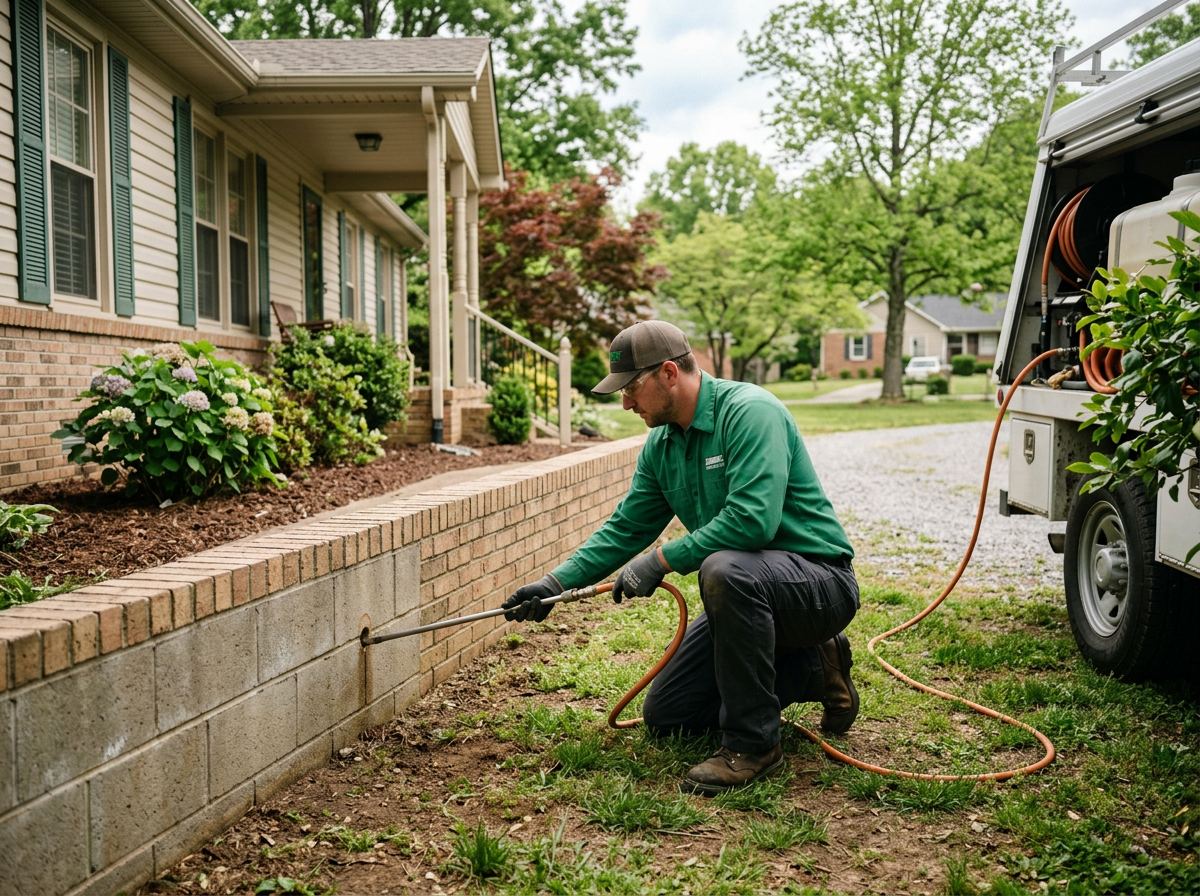
Eastern subterranean termites move through the red clay soils around Maryville homes built between the 1960s and 1990s. These brick ranches and split-levels sit on vented crawl spaces where wood-to-soil contact and poor drainage let colonies reach sill plates and floor joists. During March through May, swarmers appear inside or near foundations, leaving discarded wings on windowsills and baseboards. Crews begin by checking for mud tubes along piers, checking moisture levels with meters, and mapping active areas before any product goes into the ground.
Treatment focuses on creating a continuous treated zone around the structure. Trenching and rodding place liquid termiticide along the exterior foundation and inside the crawl space where soil meets wood. Slab and porch drilling reaches areas under concrete additions common on Alcoa and Eagleton Village properties. Bait stations are placed in the yard and checked on a schedule to intercept foraging workers before they reach the house. Vapor barriers and improved drainage are discussed when moisture readings stay high after the initial work.
Pre-construction soil treatment is offered for new builds near the Greenbelt Park area or along the Maryville College corridor. The same methods apply to existing homes where gutters dump water near the foundation or mulch piles sit against siding. Follow-up visits confirm the treated zone remains intact and bait stations show reduced activity. Work stays limited to the soil and stations; no structural wood is altered during the process.
Technician insight
In Maryville, the thing that catches most people out with Termite Treatment is how those 1960s-90s brick homes on vented crawl spaces sit in red clay that holds summer humidity right against the foundation. Homeowners often miss the small mud tubes forming on the back side of piers because they only look from the access door. Once we rod that back wall and place stations on the downhill side of the lot, activity drops fast.
Crawl Space Activity In Eagleton Village
A homeowner noticed swarmers near baseboards in April. Inspection found mud tubes on multiple piers and high moisture along the north foundation wall. Trenching and rodding were completed along the interior perimeter with bait stations added outside. Follow-up checks showed no new tubes and reduced station activity.
Termite Treatment Services We Offer
✓Crawl Space Trenching and Rodding
Creates a treated soil barrier along interior and exterior foundation walls where termites travel from the red clay into vented crawl spaces of local brick homes.
✓Slab and Porch Drilling
Drills through concrete additions and porches to reach soil beneath, stopping termite movement into areas where additions meet the original 1960s-90s foundation.
✓Bait Station Installation and Monitoring
Places stations around the perimeter and monitors them on a schedule to intercept workers before they reach sill plates and floor joists in Blount County homes.
✓WDI Inspection and Termite Letter
Documents current activity and treatment history for real estate transactions involving Maryville and Alcoa properties with known crawl space conditions.
✓Pre-Construction Soil Treatment
Applies termiticide to soil before concrete is poured on new builds near Downtown Maryville or Wildwood to prevent future colony establishment.
How it works
- 1
Site Assessment
Technicians inspect crawl space piers, foundation walls, and exterior grade for mud tubes, moisture, and wood-to-soil contact typical in Maryville brick ranches.
- 2
Treatment Application
Trenching, rodding, and drilling place termiticide along the foundation and under slabs while bait stations are installed in the yard.
- 3
Station Monitoring
Stations are checked on a regular schedule to record activity and adjust placement as needed around humid summer conditions in Blount County.
- 4
Documentation And Follow-Up
Records of the treated zone and station results are provided to the homeowner for ongoing reference.