2026-11-11 ·
Liquid Barrier vs Bait Stations: Which Fits East Tennessee Homes?
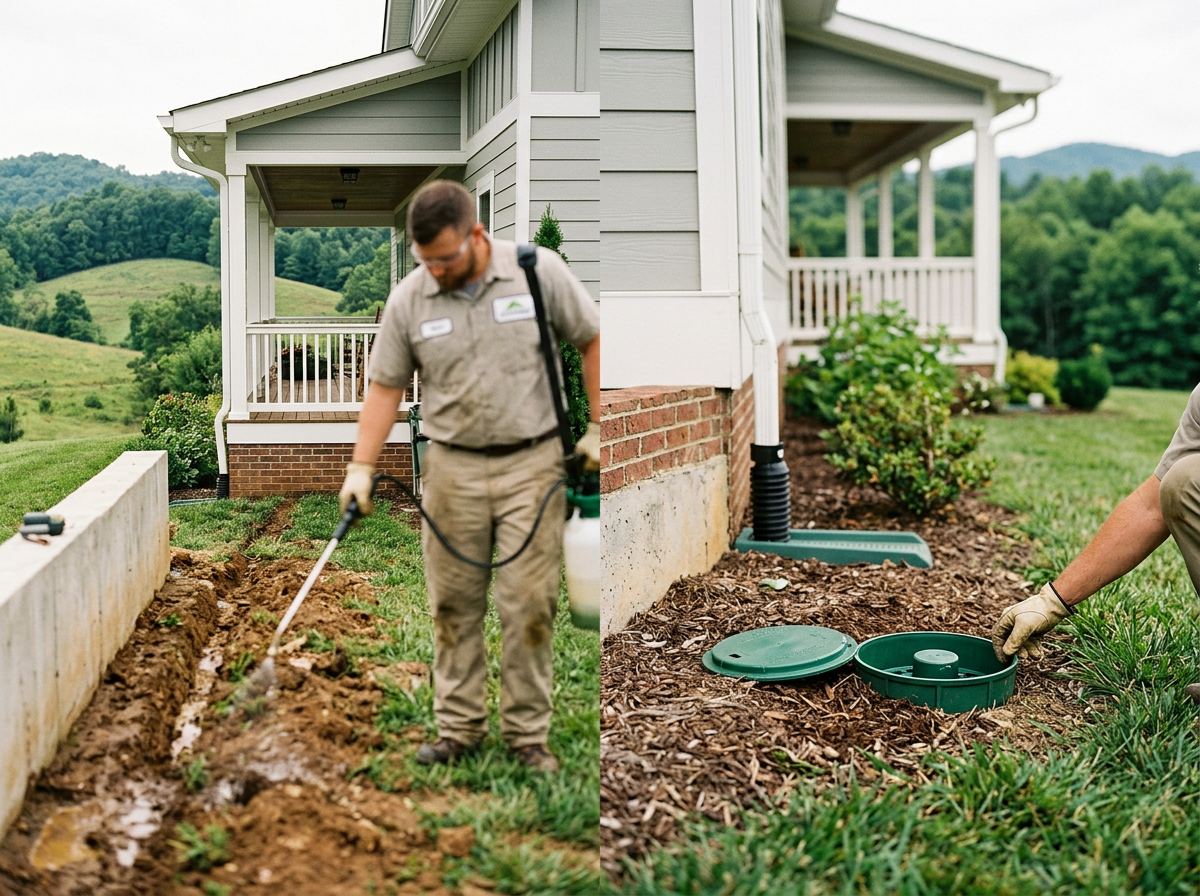
Liquid barriers deliver faster results against active subterranean termites in East Tennessee homes, while bait stations work better for long-term monitoring in properties with persistent moisture issues common around Maryville.
Liquid Termite Barriers and Local Soil Conditions
East Tennessee's red clay soils hold moisture longer than sandy ground found farther west, allowing liquid treatments to spread more evenly around foundations. Homeowners in Maryville often see termite activity along slab edges and pier footings where water pools after heavy rains. A liquid application creates a treated zone that disrupts termite tunnels as they attempt to reach wooden structures. This approach suits homes with finished basements or tight crawl spaces where direct soil access remains limited. Property owners along the Little River corridor notice that seasonal flooding can push termites toward higher ground, making a continuous barrier especially useful near older neighborhoods. Regular checks around downspouts and French drains help confirm the barrier stays intact after storms.
Bait Stations in Blount County Settings
Bait stations fit properties where ongoing monitoring matters more than immediate knockdown, particularly in wooded sections of Blount County near Townsend and Walland. These stations use stations placed in the soil to intercept foraging termites before they reach the house. The method works well on larger lots with scattered outbuildings or detached garages that liquid treatments might miss. Residents in Seymour and Eagleton Village report steady results when stations are checked on a quarterly schedule during peak swarm season. Because stations rely on termite feeding behavior, they perform reliably in areas with consistent ground moisture from nearby creeks. Homeowners can combine stations with improved drainage to reduce attractants without disturbing existing landscaping beds.
Comparing Performance Around Maryville Foundations
The choice often hinges on whether a home already shows damage or simply needs prevention. Liquid barriers reach termite colonies faster when mud tubes appear along brick or block foundations, a frequent sight after wet winters in central Blount County. Bait stations require more time to establish control but allow technicians to track activity patterns over multiple seasons. Homes built on slopes near Rockford or Louisville may experience shifting soil that can compromise a liquid zone, favoring stations instead. Both methods address the same local species of subterranean termites that swarm in early spring. Liquid termite barrier treatments and termite bait stations each receive follow-up inspections tailored to the property's layout and age.
Practical Checks for Homeowners
Walk the perimeter after rain to spot new mud tubes or discarded wings near windows and doors. Check crawl space vents for proper airflow, since excess humidity draws termites toward sill plates. Examine mulch beds placed against siding, as these create bridges over any existing soil treatment. Look for soft spots in deck posts or porch columns, especially on lots shaded by mature trees common throughout Maryville. Note any recent additions like room extensions that may have disturbed earlier soil treatments. These observations help decide whether a liquid zone or bait system aligns better with the home's current conditions and future plans.
Matching the Right Approach to Your Property
Homes with finished interiors and limited soil access around the foundation benefit most from liquid barriers that protect without major excavation. Larger rural parcels or those near crawl spaces that draw termites often respond better to bait stations that can be expanded as needed. Property owners in Friendsville and Greenback frequently combine both methods on the same lot when outbuildings sit at different elevations. Annual reviews with a local termite specialist keep the chosen system matched to changing moisture patterns and any new construction nearby. This targeted decision process protects the structure while respecting the specific soil and climate realities of East Tennessee.